Showing posts with label building projects. Show all posts

Sunday, 23 November 2014

The General Review of Building Works (III)

General Review in Spain (III)

Coordinator for Safety and Health. Types of Builders.


If the works of a building project involve more than one company or freelancer, the developer must designate a Coordinator for Safety and Health during the performance of the works. According to the Spanish LOE (Law on Construction Planning), the enabling qualifications to serve as a Coordinator for Safety and Health in building projects are:
  • Architect
  • Technical Architect
  • Engineer
  • Technical Engineer.

The Coordinator for Safety and Health shall perform the following functions:
  • coordinating the implementation of the general principles of prevention and safety in making technical decisions, in order to plan the work to develop
  • coordinating the activities of the work, in order to ensure that contractors, subcontractors and freelancers apply the principles of preventive action in a consistent and responsible manner
  • approving the Safety and Health Plan prepared by the builder and, when applicable, the modifications introduced therein
  • organizing business activities
  • coordinating actions to control the correct application of the working methods
  • taking measures to limit the access to the building works.

When the building works are not very complex, the developer tends to shift the appointment of the Coordinator to any of the professionals in the Professional Management, either the Director of the Works or the Director of the Performance of the Works.

The Builder

Construction firms can respond to the following classification:
  • small companies: they have little business infrastructure and use to outsource some services
  • medium companies: they have some technician workforce, which use to act as representative on site
  • big companies: they have complex charts composed of delegates, team leaders, production managers, etc.

Small companies use to pursue reform projects for homes, shops and public buildings, and new-building projects for single houses and small housing developments. Medium companies access to more types of works, through tender or auction. Big companies reach high budget building projects.
Architecture Services for Building Projects


Architect Daniel Trujillano

Saturday, 21 January 2012

Architectural Client Role

The Client Role in Building Projects

How to be a Successful Architectural Client

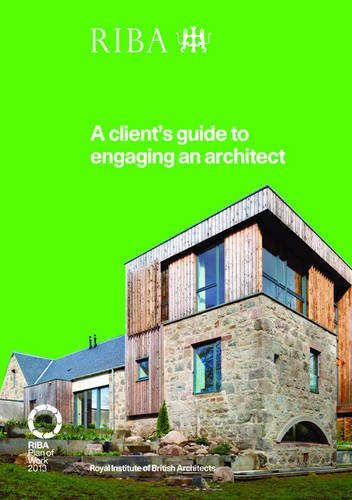
A Client's Guide to Engaging an Architect: Guidance on Hiring an Architect for Your Project
The process of creating buildings is one of the most complex, challenging and fulfilling activities that an individual or organization can undertake. The client role is a crucial success factor in the quality of the final product. To be a successful client requires a combination of attributes and attitudes: leadership, boldness, shrewdness, excellent communication, determination and dedication.

Success Factors in Building Projects

The key success factors described here will help any client through the development process to produce an excellent building. These key skills and attributes are frequently shared by clients on successful building projects:
  1. Provide strong client leadership. Great projects need great leadership to inspire a great team to a great performance. It is when you, the client, contribute your strengths, knowledge, care and commitment to quality that you will get the best out of those working for you so that together you can create wonderful buildings and exceptional environments that meet your needs.
  2. Give enough time at the right time
  3. Learn from your own successful projects. Experience can be a great advantage. Good clients learn from their mistakes.
  4. Learn from other successful projects. Many clients do not have the benefit of experience. Some will be undertaking only a small number of projects, perhaps just one building. One way of avoiding the pitfalls and achieve an excellent outcome is to borrow from the experience of others.
  5. Develop and communicate a clear brief
  6. Make a realistic financial commitment from the outset. One of the first concerns is always money. There is almost never enough to spend on a project and you want to make sure you get good value. Being concerned from day one about the budget is not something to be embarrassed about – it’s good sense. Honesty about how much you’ve got to play with is always a right starting point. Your architect should be able to work with a reasonable known budget and the discipline can stimulate creativity and innovation. Sound financial management and an aspiration for excellent quality go hand in hand.
  7. Find the right people for the job. Get the right team and you can expect professionalism, design skills and expertise in project delivery from the best players in the construction industries.
  8. Respond and contribute to the context
  9. Sign off all key stages.