Showing posts with label spanish architect. Show all posts

Wednesday, 22 May 2013

Spanish Architect's Qualifications in the Building Process


The Spanish Architect and the Construction Agents

Qualifications of Architects in Spanish Building Process


In Spain, the 'Ley de Ordenación de la Edificación' (LOE) prescribes what degree qualifies to play the role of each agent in the building process, which depends on the use the building is intended to allocate.

The Architect as Building Designer and Director of the Works

The Building Designer ('Proyectista') is the agent who make both the Architectural Design and the Construction Documents, on behalf of the Property Developer and with due respect to all relevant technical and planning regulations.

The Director of the Works ('Director de obra') is the agent who, as a part of the technical management, directs the development of the work in technical, aesthetic, planning and environmental aspects, in accordance with the Architectural Design, the Construction Documents, the building permit, any other required approvals and the terms of the contract, in order to ensure the suitability of the building for its intended purpose.

Spanish Architect's degree enables to act as both Building Designer and Director of the Works in all cases where the LOE is applicable. In addition, a Spanish Architect is the only professional who can be both Building Designer and Director of the Works in projects for buildings where the use is Administrative, Sanitary, Religious, Residential in all its forms, Educational or Cultural (Group A uses the LOE).

The Architect as Director of the Performance of the Works

The Director of the Performance of the Work ('Director de la ejecución de la obra') is the agent who, as a part of the technical management, assumes the technical role of directing the performance of the works and of monitoring the construction and the quality of what is being built.

A Spanish Architect's degree enables to act as Director of the Performance of the Work in the following cases:
  • In building projects where primary use belongs to the Group B of the LOE, if the Director of the Works is not also an Architect. That is, a Spanish Architect can be the Director of the Performance of the Work if the primary use of the building is Aeronautical, Agricultural, of Energy, of Hydraulics, Miner, of Telecommunications, of Land, Sea, River and Air Transport, Forest, Industrial, Naval, of Sanitation and Hygiene Engineering, or Accessory to Engineering Works and their Exploitation, provided that the Director of the Works is Engineer or Technical Engineer.
  • In building projects where primary use is parking or commercial (Group C of the LOE), even if he also acts as Director of the Works. That is, according to the LOE, a single Spanish Architect can act as Building Designer and then, simultaneously, be Director of the Works and Director of the Performance of the Works in the building projects where the primary use is parking of vehicles, shops, department stores, malls, markets, shopping malls, laundromats, hair salons, etc.

In the works where the primary use belongs to the Group A of the LOE, the Director of the Performance of the Work can only be Technical Architect ('Arquitecto técnico'), and the same happens in the projects where the primary use belongs to the Group B of the LOE if the Director of the Works is an Architect.

The Architect as Health and Safety Coordinator

Spanish Architect's degree enables to act as Health and Safety Coordinator in the building process, during the drafting of the Construction Documents and during the performance of the work, in all cases where the LOE is applicable.
Architectural Design


Monday, 20 May 2013

Glossary

Glossary for Building Projects in Spain

Definitions

3,163 Terms Architecture and Construction: Dictionary Spanish - English - Spanish / Jan 2015 (English Edition)
Some terms related to the building process in Spain:

Arquitecto = Architect

The architect is the professional who is member of the Colegio Oficial de Arquitectos of any province in Spain.

Obra = Work

The Work means the total construction and related services required by the construction contract documents.

Presupuesto de Ejecución Material (PEM) = Material Performance Cost

Material performance cost is a price of all project elements designed or specified by, or on behalf of, or as a result of, the coordination by the architect. Material performance cost includes the cost of all materials and labour necessary to complete the Work, and excludes the following:
  1. the overhead and the profit of the contractor
  2. the full amount of value-added taxes
  3. the building permit fees
  4. the compensation of the architect and the consultants
  5. other professional fees which are the responsibility of the client
  6. the land cost, and land development charges.

Anteproyecto = Schematic Design

Schematic design documents to illustrate the scale and character of the project and how the parts of the project functionally relate to each other, based on the mutually agreed upon program of requirements and schedule.

Proyecto básico = Architectural Design

Design development documents drawings and other documents appropriate to the size of the project, based on the client’s approved schematic design documents and agreed estimate of material performance cost.

Proyecto de ejecución = Construction Documents

Construction documents consist of drawings, specifications and other documents appropriate to the size and complexity of the project, to describe the size and character of the entire project including architectural, structural, mechanical, and electrical systems, materials and such other elements setting forth in detail the requirements for the construction, enlargement or alteration of the building or buildings of the project.

Dirección de obras = General Review

General review means review during visits to the place of the Work at intervals appropriate to the stage of the construction that the architect in its professional discretion, considers necessary to become familiar with the progress and quality of the Work and to determine that the Work is in general conformity with the construction contract documents, and so report, in writing, to the client, contractor and chief building official.

Monday, 4 June 2012

The Fees on Construction Projects in Spain (II)

Professional Fees of Spanish Architects in Building Projects (II)

Type of Work, Construction Cost and Fee Proposal

For a proper calculation of the professional fees corresponding to a building project, an architect needs to know the type of work and all data necessary to estimate a probable construction cost.

Types of Building Work

Among the building projects, there are four main types:
  • new construction, which involves the absence of previous buildings on site, or the complete demolition of any existing building before proceeding with the planned works
  • extension, which implies that there is already a building and that the project implies expanding its built area
  • reform, which implies that there is already a building, currently valid for its characteristic use, and that the project does not alter such characteristic use
  • rehabilitation, which implies that there is already a building and that such building is not valid for its use, either because of its state of disrepair or because the projected use is different than the one for which the building was originally designed.

Construction Cost

Construction Cost Analysis and Estimating by Phillip F. Ostwald (2000-06-04)
The calculation of the fees for a building project typically goes through the previous estimate of a construction cost. A proper calculation of the construction cost shall require that the architect receives at least the following information:
  • project location: municipality and sector within the municipality
  • building height, in number of storeys
  • list of building uses
  • built area for each of the building uses
  • pursued building qualities.

Fee Proposal for Building Projects

The calculation of the fees for a building project is complex enough to make it not feasible for architects to offer predetermined rates. They can't also offer their clients a calculation method that can be implemented without specialized knowledge. Therefore, normally, Spanish Architects will fulfil their legal obligation to report the amount of their fees for a building project by providing, upon request, a sufficiently detailed Fee Proposal.
Architectural Design

Wednesday, 30 May 2012

Spanish Architect's Fee

Professional Fees of the Spanish Architects

The cost of architectural services in Spain

Before April 16, 1997, fees of Architects in Spain were governed by the fee scales established by the Colleges of Architects. However, after the entry of the “Ley de Medidas Liberalizadoras en Materia de Suelo y de Colegios Profesionales” (Law of Liberalization Measures on Land and Professional Associations), the rates established by professional associations became only for guidance. Since then, Spanish Architects have complete freedom when it's to determine the amount of professional fees that correspond to their services.

Items Comprising the Fees

Like any other professional, Spanish Architects are entitled to receive the payment for the professional fees earned by providing services and to recover the costs which were needed to complete their work. The amount of the Architect's professional fees must include at least the following items:
  • a compensation for the time spent on the professional assignment
  • a compensation for the expenses he had to incur: travel, materials, obtaining documents, etc.
  • an adequate remuneration for the duties performed.

In addition, the calculation should take into account the degree of complexity of the assignment and the possible need for specialized knowledge.

The Reporting Obligation

Spanish Architects have a legal obligation to inform their clients about the amount of their professional fees. The current “Ley sobre el libre acceso a las actividades de servicios y su ejercicio” (Law on Free Access to Services Activities and its Exercise) provides two methods for this:
  • the Architect previously set a price for a particular type of service, in which case he must provide, in an easily accessible way for clients, the full price, including taxes
  • the Architect doesn't set the price beforehand, in which case, at the client's request, he shall provide the service price, or a method to calculate it, or a sufficiently detailed fee proposal.
Architectural Design


Daniel Trujillano, Spanish Architect
http://www.arquitectotrujillano.com/home.html
Professional Architectural Services for Building Projects in Spain

Monday, 21 November 2011

Scope of services, fee proposal, negotiation and contract

Defining the Scope

After the Selection of your Architect in Spain

The success of a project will depend directly upon the proper identification of the scope of work. After successfully completing the selection of your architect, he and you will have to jointly review and define the scope of work and overall parameters of the project, including the terms and conditions of the contract. Once an agreement has been reached on these matters, your architect will develop and submit a detailed work plan. You and your architect will have to review this work plan and jointly determine the scope of services for the project.

Fee Proposal and Negotiation

Once an agreement on the scope of services and work plan has been reached, your architect will prepare and submit a fee proposal for review. The use a work breakdown structure and detailed task list can facilitate the development of the scope of services and fees. In addition to better defining and customizing the services and fees for a particular project, the use of the work breakdown structure will ensure that all personnel involved in the preparation of the proposal are following the same parameters. The work breakdown structure and detailed task list will form the basis of the final scope of services and fee proposal.
If the fee proposal is accepted, both parties will enter into an agreement by signing the contract. If an agreement is not reached, both parties can return to the negotiation of the scope of services and fee. If for any reason an agreement cannot be reached, negotiations will be terminated.

Signing the Contract

Normally, the contract will include the services provided, the fee for those services, the client responsibilities, and the terms and conditions which govern the contract. In addition to identifying the value and contribution of both parties, the contract should be a balanced document, treating both parties fairly, and must be designed to avoid conflict later on when it is discovered that the expectations of the parties to the contract may differ. One of the best investments of time is a careful, item-by-item discussion between you and your architect to define the scope of services and other terms and conditions of the contract.
Architectural Design


Architect Daniel Trujillano
http://www.arquitectotrujillano.com/home.html
Architectural Services for Building Projects

Monday, 14 November 2011

Selecting a Spanish architect

Selection and agreement

Engaging your Spanish architect


To best meet the client's needs, Spanish architects compete on the basis of their ability to provide the required services at a professional standard of quality, not on the basis of fees. Given that the architectural fees represent such a minute portion of the overall investment you are making over the lifetime of your project, it doesn’t pay to short-change yourself. A good Spanish architect will be providing you with the necessary services to provide you with the most successful results. Good Spanish architects are on an appropriate balance of skill, experience, imagination, innovation, sensitivity and ability to perform on schedule and within a construction budget consistent with your needs. Once you have selected your Spanish architect, and have jointly established the range of services you will require, it is relatively simple to negotiate a fair fee.

Fees

Once you have selected your Spanish architect, it’s recommended that you discuss in detail the list of services which you will need for your project. Your Spanish architect can prepare a Detailed Task List setting out each of the services you agree will be provided. He will then present to you the fee necessary to provide that range of services. If you feel the fee is not manageable for you, you and your architect can discuss eliminating services, and reducing the fee, until it is acceptable. While it may be tempting to simply continue to reduce levels of service in order to bring down the fee, remember that it is in your ultimate best interest to make sure your architect will be able to provide the necessary level of service to protect you and your investment, and meet the standards of service established by the profession in Spain.

Obligations and Responsibilities

Architect's Essentials of Contract Negotiation (The Architect's Essentials of Professional Practice) by Ava J. Abramowitz (2002-04-09)
Any business or professional relationship is bound to be most successful and rewarding when there exists a clear understanding of the expectations of the parties. The relationship between client and architect is no exception. Once you have established the scope of services which your Spanish architect will provide, the fee which you will pay him, and the other responsibilities each one will have related to the project, put it in writing. Your Spanish architect can draft the agreement based on your negotiations and discussions. Carefully review each clause to ensure that you understand the details, and clarify any miscommunication. Customize the agreement to reflect the details of, for example, the scope of services your architect will provide, and the information about the project or site which you will be providing. You can obtain legal advice at your option before formally execute the agreement to start your project.

Additional services

Other architectural services

Additional services a Spanish architect can provide

Additional architectural services in Spain

The 2016-2021 Outlook for Architectural Services in Europe & the Middle East
A Spanish architect can do a lot more for his clients should the need arise:
  • He can assist his client in finding the right site for the project or in comparing a number of sites
  • He can prepare a feasibility analysis or ‘highest and best use study’ of a property the client already owns or is considering purchasing
  • He is skilled at obtaining the many approvals required for construction in Spain: rezoning, minor variance, site plan agreement or approvals from specific committees, agencies or Ministries
  • He can help his client coordinate a move from one location to another, including an inventory of furniture and equipment
  • By carrying out a detailed review of client operations, he can assist his client in making more efficient use of space already owned, and help determine if renovation, additions or relocation may be necessary
  • He might assess a building before a client invests, identifying necessary upgrades and their costs
  • He can provide interior design services
  • He can facilitate the engaging of the wide range of specialist consultants often necessary for today’s construction projects
  • He might assist his client in obtaining financing
  • He may provide complete project management services, from helping determine if there is need for construction, through the entire process of erecting then using the building, and may even help the client manage the facility through its lifetime of use

In other words, the list of services provided by Spanish architects, and highly-valued by their clients, is practically endless.

Sunday, 13 November 2011

Some of the Services a Spanish Architect can Provide

Range of Services

Scope of Expertise of Spanish Architects

The 2018-2023 World Outlook for Architectural Services
Planning a new building, renovating or restoring an old one, solving a particular functional or space planning problem, are all within the scope of the expertise of Spanish architects.

Traditional Services

A typical range of ‘traditional services’ for a project in Spain can include:
  • Helping the client to understand and articulate needs and aspirations
  • Developing the formal set of requirements for the project: the program
  • Helping the client to establish a realistic and achievable budget and schedule for the project
  • Providing the client with a list of required site information such as survey and soils information, and assisting the client in obtaining that information when requested
  • Obtaining and coordinating structural, mechanical and electrical engineering services
  • Preparing a comprehensive analysis of the requirements of Spanish authorities having jurisdiction, including zoning, site plan control, Building and Fire Codes
  • Preparing concept or schematic design, sometimes several alternatives
  • Reviewing those concepts with the client, and assisting the client in deciding on the most appropriate design
  • Reconfirming the schedule and the budget
  • Developing the selected design in more detail and reviewing it with the client, including any changes to the schedule or budget
  • Preparing the detailed construction documents (plans and specifications) which will be used to apply for building permit, determine the construction cost, and build the project
  • Help the client decide the most appropriate method of building: stipulated sum construction contract, construction management, design/build or other method
  • Assist the client in obtaining bids, and executing the appropriate construction contract
  • Administering the contract, and certifying payments to the constructor when they are due
  • Carrying out general review during construction, reviewing random samples of the construction as it proceeds to assure that the project is being built in general conformity with the plans and specifications
  • Identifying deficiencies in the work and facilitating their correction
  • Helping the client to ‘take over’ the completed project, and showing the client how to use the building and its equipment
  • assisting the client in getting warranty repairs if problems arise.

Tuesday, 13 September 2011

The Value of a Spanish Architect

Working Relationship with your Architect in Spain

The Contribution of the Spanish Architect

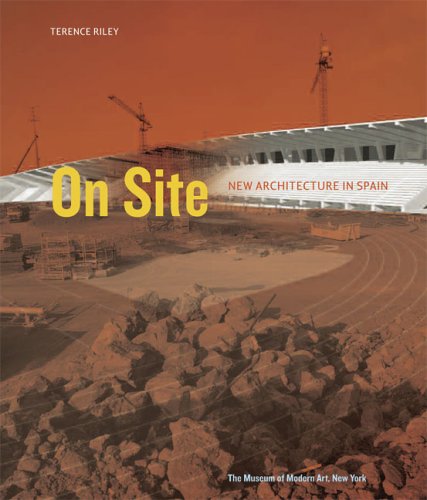
On Site: New Architecture in Spain
In Spain, the LOE (Ley de Ordenación de la Edificación) details the specific cases where you should hire an architect. However, even where not required by law, consultation with a Spanish architect will always help you ensure that your building project in Spain will be as successful as possible. When you hire a Spanish professional you choose a person with specialized knowledge based on intensive academic preparation combined with technical and ethical standards.

Professionals in the Spanish Building Industry

The building process in Spain can be complex and challenging. It will probably be necessary to take many decisions, which will have a major impact on the outcome. A Spanish architect can ease the way by helping you to avoid wrong directions and leading you to creative and innovative solutions. The Spanish architects are well aware of the working methods of the Spanish construction industry and the applicable laws and regulations, and can guide you at every step of the project. Hiring a Spanish architect will provide peace of mind. Your Spanish architect can help you manage the design, construction and budget. He may be responsible for managing the project and coordinating the work of consultants and contractors.

The Value of a Spanish Architect

Whatever your project, whether building a new building or reforming, rehabilitating or expanding an existing building, a Spanish architect will bring value to your project. The architect's contribution to the building extends beyond form and aesthetics. He can influence the perception, performance and value of the building. A Spanish architect can design a building, an urban planning or an interior which will suit the needs of the users current and future, by creating environments not only productive but also enjoyable to visit and live. Consulting a Spanish architect in the early stages of the project opens the door to cost savings, both in construction and operation of the building, through innovative design solutions. A good Spanish architect can interpret your ideas with imagination and create spaces that can be used, enjoyed and appreciated for decades. The Spanish architects are prepared to take advantage of the location, urban conditions, construction systems and applicable laws and regulations to maximize what you can get with your budget. In addition, a skilled architect can reduce the operating costs over the lifespan of the designed building.